

TL;DR: The approved brief reports that a 2026 Wharton conference summary found the largest productivity gains where synchronous expert input was hardest to obtain. Leaders can use delays or limited access to that input as a lens for identifying workflows to assess, but the finding is not a universal rule. Evaluate workflow outcomes while preserving necessary human review.
- Use delays or limited access to synchronous expertise as a lens for identifying workflows to assess for AI.
- Treat the reported Wharton finding as a research signal, not a guarantee that a workflow will improve.
- Assess outcomes that matter to the workflow; speed alone may not show that the work improved.
- Preserve necessary human review when evaluating AI's contribution.
AI workflow selection can start with a practical question: where do delays or limited access to synchronous expert input constrain the work? The approved brief reports that a 2026 Wharton conference summary found the largest productivity gains in work where synchronous expert input was hardest to obtain. Treat that as a research signal for deciding what to assess, not a guarantee that AI will improve any particular workflow.
The approved brief reports that a 2026 Wharton conference summary found the largest productivity gains where synchronous expert input was hardest to obtain. Leaders can use delays or limited access to that input as a lens for identifying workflows to assess, but the finding is not a universal rule. Evaluate workflow outcomes while preserving necessary human review.
The conference page lists presenters and notes that not all presenters have papers available to share. The Wharton Business Generative AI Conference 2026 page provides that context; the material supplied for this article does not include the methods or detailed results behind the reported productivity finding.
For executives and operations leaders, the practical implication is narrow: examine whether constrained access to synchronous expertise is a meaningful feature of a workflow, then evaluate whether AI improves the work while preserving necessary human review. The finding does not establish that AI replaces experts or benefits every workflow with an access constraint.
What does the reported Wharton finding signal – and what does it not?
The approved brief reports that the largest productivity gains occurred where synchronous expert input was hardest to obtain. This suggests a useful question for AI workflow prioritization: might limited or delayed access to that input constrain the work? It does not predict which workflow will improve or by how much.
That distinction matters because the supplied material does not provide the study methods, sample, measured outcomes, or size of the reported gains. Without those details, the finding cannot support precise conclusions about which kinds of work benefit, whether the relationship applies across organizations, or how large a gain to expect.
Nor does the reported pattern show that AI can replace expert judgment. The decision lens pairs possible workflow improvement with a safeguard: necessary human review must remain. The finding is a reason to investigate a candidate workflow, not a reason to remove oversight or assume the work is suitable for AI.

How should AI workflow selection account for expert access?
Use delays or limited access to synchronous expertise as a lens for identifying workflows to assess. Start with the work itself: ask whether it depends on input from an expert at the point when that input is needed, and whether difficulty obtaining it constrains progress or the workflow’s outcome.
The question is not simply whether expert input is hard to reach. It is whether that constraint matters to the work being considered. If the workflow does not depend on timely synchronous expertise, this particular research signal gives leaders less reason to prioritize it. If access does appear to constrain the work, that makes the workflow worth assessing – not automatically a good AI candidate.
Keep the decision focused on the specific workflow. A signal associated with one workflow should not be treated as evidence that AI will improve other work across the organization. The approved brief supports a selection lens based on access to expertise; it does not make a general case for broader AI adoption or compare AI tools.
How can leaders assess whether AI improves the workflow?
Assess whether AI improves an outcome that matters to the workflow, under the conditions in which the work is performed. The supplied material does not prescribe a particular measure, so leaders should not assume that speed alone demonstrates an improvement.
A faster step may not mean the workflow as a whole has improved. Consider the purpose of the work and the result it needs to produce, then assess whether AI changes that result. Keep conclusions specific to the workflow evaluated; an observed improvement in one process does not establish that another will see the same effect.
This is how AI productivity research can inform a decision without being overread. The Wharton signal, as reported in the approved brief, points toward a possible relationship between productivity gains and hard-to-reach synchronous expertise. The evaluation still has to establish whether that relationship holds for the work under consideration. The available source material does not provide a standard evaluation method or specific outcome measures.
How should human review be preserved in AI workflows?
Include necessary human review in the assessment from the beginning. Evaluate whether AI improves the workflow while keeping the review required for that work in place. If an apparent improvement depends on weakening necessary review, it does not meet the decision test described here.
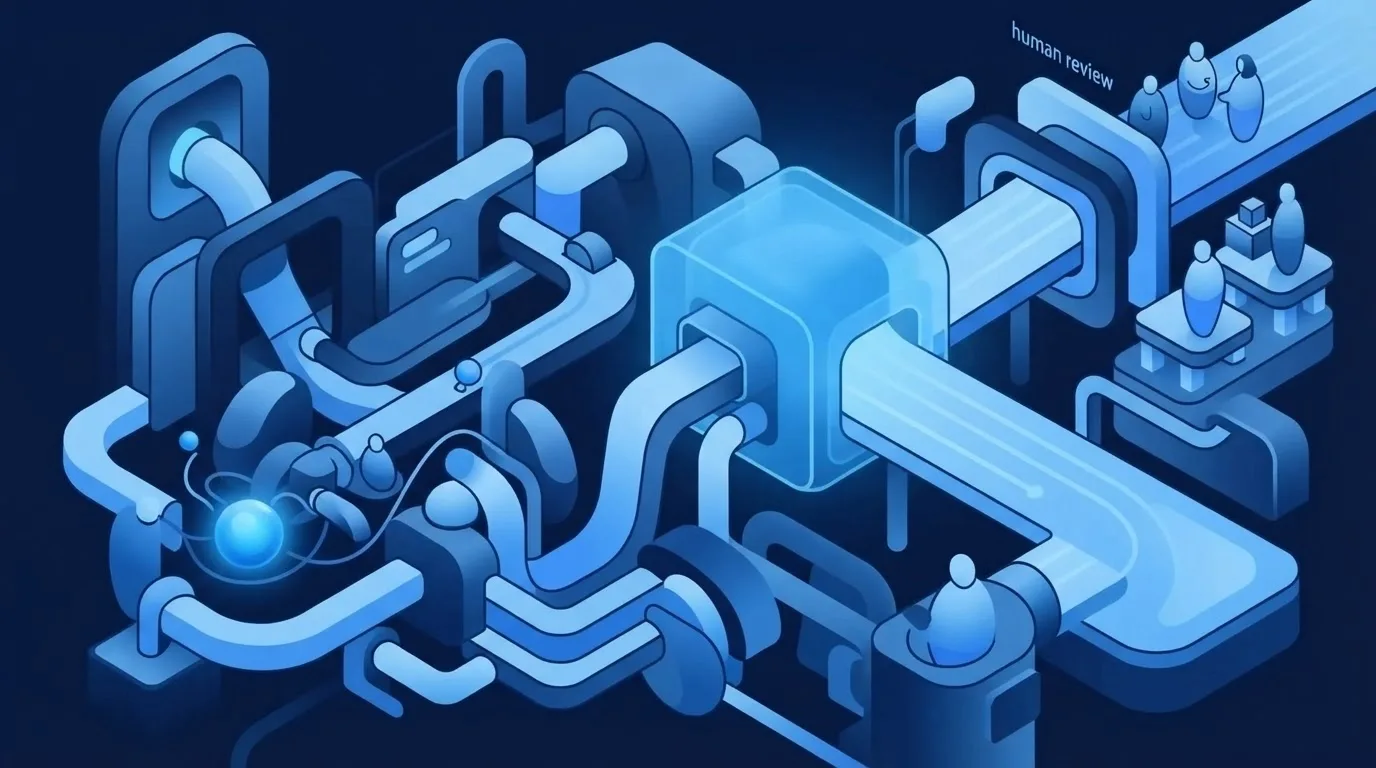
This keeps the role of AI clear. The question is whether AI may help with work constrained by access to synchronous expert input – not whether experts can be removed from the process. The reported conference finding does not establish that AI can safely take over expert decisions.
The supplied material does not define a review model or specify the right level of oversight. That decision depends on the work being evaluated. Leaders should therefore make preservation of necessary review part of the assessment, without claiming that this source provides a universal oversight approach.
Does the finding mean AI improves every workflow where experts are hard to reach?
No. The reported pattern is a research signal, not a universal rule or a guarantee of improvement. Limited access to synchronous expertise can help identify workflows to assess, but leaders still need to evaluate the outcome and retain the review the work requires.
The supplied excerpt is incomplete, so details beyond the approved brief cannot be verified here. Do not infer specific study methods, numerical results, workflow examples, or operational conditions from the reported finding. Keep the conclusion proportionate to what is available: use the signal to guide evaluation, then rely on the results of that evaluation for the workflow decision.
What should leaders take from the research signal?
Use difficulty obtaining synchronous expert input to decide where to look, not to predict where AI will succeed. A disciplined assessment identifies the access constraint, evaluates whether the workflow outcome improves, and checks that necessary human review remains intact.
That is the practical boundary of the finding. It can shape AI workflow selection without becoming a claim that AI improves every constrained process, replaces expertise, or removes the need for judgment.
Key takeaways
- Use delays or limited access to synchronous expertise as a lens for identifying workflows to assess for AI.
- Treat the reported Wharton finding as a research signal, not a guarantee that a workflow will improve.
- Assess outcomes that matter to the workflow; speed alone may not show that the work improved.
- Preserve necessary human review when evaluating AI’s contribution.
Practical tips
- Describe how limited or delayed synchronous expert input affects the workflow before considering AI.
- Identify the workflow outcome that matters before assessing whether AI improves it.
- Include preservation of necessary human review in the evaluation.
Related Posts

EU E-Invoicing Mandates: Which Country Rules Shape Your Roadmap?
Does your invoicing roadmap start with ViDA in 2030? It may need to account for…


Backup Restore Testing: Can Your Backups Restore Operations?
Scheduled backup jobs show that backups ran. Restore evidence helps leaders…

Post-Quantum Cryptography: How Long Must Data Stay Secret?
Q-Day remains uncertain, but encrypted data can be collected now and decrypted…