

TL;DR: The article argues that ambitious bundled or “Super App” products often fail because their underlying data schemas were designed for single-purpose services. Before bundling, teams should audit identity resolution, event namespacing, and concurrency requirements; keep data services modular, avoid oversized “God Tables,” and use dynamic interfaces to hide complexity. If integration offers little user value or creates excessive maintenance overhead, separate products may be the better choice.
- Audit whether users can have different roles, billing cycles, permissions, and residency requirements across services.
- Use strict event namespacing and modular data services to prevent analytics collisions and database compromises.
- Avoid forcing disparate workloads such as chat and payments into one schema or database.
- Measure the integration tax in developer time and maintenance capacity before committing to a bundle.
- Use dynamic UIs to conceal backend complexity, and avoid bundling when cross-service data provides limited user value.
Product ambition often runs ahead of the data model. The debt appears later, when every new feature needs exceptions, sync jobs, duplicate state, or manual cleanup.
A 50-person SaaS team recently spent 12 hours weekly on manual reporting because they tried to merge a legacy chat tool with a new fintech offering. They thought the ‘bundle’ would drive retention; instead, it created a technical debt spiral over six months. Most founders see the ‘Super App’ as a UI challenge, but the real graveyard is your data architecture.
Elon Musk’s X, Disney, and Uber can afford to ‘vibe code’ their way through massive service mergers because they have thousands of engineers to brute-force the integration. For a 100-person startup, shoving ‘X Money’ into a legacy ‘X Chat’ schema isn’t an evolution—it’s a suicide mission for your reporting layer. If your core tables weren’t built for multi-entity logic, your product ambitions will stall before the first update hits the App Store.
The high cost of ‘vibe coding’ your way to a bundle
When leaders decide to bundle services—like Airbnb adding car rentals or OpenAI merging ChatGPT with browser tools—they often overlook the infrastructure reality. In a recent engagement, we saw a mid-sized firm try to integrate a secondary product line into their primary app. Because the original schema used a hardcoded user_id as the primary key for all transaction logic, they couldn’t support users who held different roles across different services.
This isn’t just a naming convention issue. It’s a fundamental mismatch between business logic and data gravity. When you force disparate services into one bucket, your query complexity doesn’t just double; it grows exponentially. You end up with ‘God Tables’ that are 100+ columns wide and impossible to index efficiently. Before you decide to bundle on Monday morning, you need to realize that code is a liability and every new feature adds a permanent tax to your system performance.
Why Western ‘Everything Apps’ usually fail at the database level
WeChat and KakaoTalk succeeded because they were built as ecosystems from day one. In the West, we build highly focused, ‘single-purpose’ apps like Uber or Twitter. When these apps try to pivot toward the ‘Super App’ model, they are fighting against years of schema calcification.
“A 10M row table that was optimized for simple messaging will buckle the moment you try to join it against a high-frequency ledger for financial transactions.”
Meta is the poster child for this struggle. They have spent a decade bundling and unbundling Messenger and Photos because the user experience bloat is often a direct reflection of the underlying data mess. If your developers are spending more time writing ‘if-else’ statements to handle edge cases between bundled services than they are shipping new features, you aren’t building a Super App—you’re building a monolith that’s too heavy to move.
Technical due diligence: What to check before you bundle
Before you commit to a multi-service interface, you must perform a cold-eyed audit of your data systems. If you don’t, you’ll find that 40% of tech roles go to maintenance instead of innovation. Start with these three checks:
- Identity Resolution: Can your system handle a single user having different permission sets, billing cycles, and data residency requirements across the ‘bundle’? If your
userstable is the only source of truth, it’s likely too rigid. - Event Collision: When a user ‘clicks’ in your app, does your analytics schema know if that click belongs to the ‘Chat’ service or the ‘Payments’ service? Without a strict namespacing strategy, your business intelligence will be a hall of mirrors.
- Concurrency Limits: If your ‘Money’ service requires ACID compliance but your ‘Chat’ service is optimized for eventual consistency, putting them in the same database will force you to choose between speed and data integrity.
The ‘Microsoft Office’ trap: UX bloat as a data symptom
When your service starts requiring nested menus and complex drop-downs, you’ve effectively created a mobile version of Microsoft Office. This happens because the product team is trying to expose every new data entity you’ve added to the backend. OpenAI recently had to simplify ChatGPT’s interface because the ‘everything’ approach was making the tool unusable for the average consumer.
To avoid this, look at how Netflix handles complexity. They don’t show you everything at once; they use dynamically served interfaces powered by AI to hide the underlying complexity. This requires a highly decoupled data layer where the UI doesn’t need to know the structure of every table to render a clean home screen. If you haven’t mastered AI autopilots and digital transformation at the architectural level, your Super App will just feel like a junk drawer.
When NOT to bundle: The case for staying small
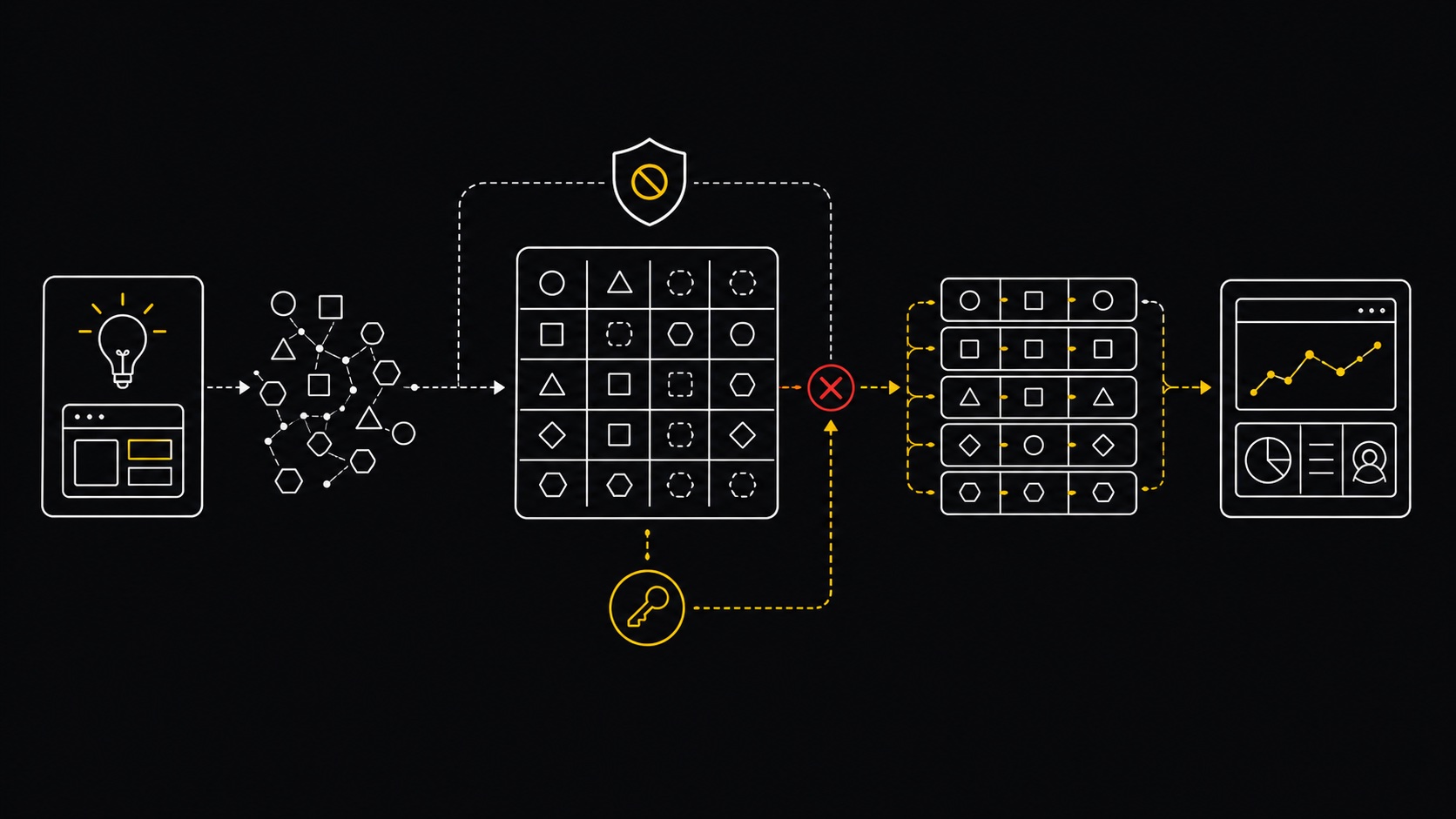
Bundling is a growth strategy, but it’s often used as a distraction from a core product that is plateuing. If your unit economics on Service A are failing, adding Service B into the same app won’t magically fix them—it will just hide the loss in a more complex P&L.
For a startup with 100 people, the overhead of maintaining a Super App infrastructure can consume 30-50% of your total engineering capacity. Unless the cross-pollination of data between the two services provides a 10x better experience for the user, you are better off keeping them as separate, lean entities. Pragmatic data engineering means knowing when to say no to a ‘unified’ view that provides no actual business value.
Key Takeaways
- Audit your identity layer before merging services; if you can’t handle multi-tenant logic within a single user, the bundle will fail.
- Avoid ‘God Tables’ by using a micro-service approach to data, even if the UI looks like a single app.
- Measure the ‘Integration Tax’ in developer hours; if syncing services takes more than 20% of your sprint, your schema is the bottleneck.
- Prioritize dynamic UIs that hide complexity rather than exposing every new feature on the home screen.
Frequently Asked Questions
How do I know if my current schema is ready for a Super App transition?
If your primary database tables require more than three joins to answer a basic question about user behavior across different feature sets, your schema is likely too rigid. You should also check for hardcoded dependencies on service-specific logic within your core user and transaction tables.
What is the biggest hidden cost of bundling separate apps?
The biggest cost is ‘Context Debt,’ where developers must understand the entire interconnected system to make a change to a single feature. This often leads to a 30% drop in deployment frequency as the testing surface area expands across all bundled services.
Should we use a single database for all services in a Super App?
Almost never. While the UI is unified, the data layer should remain modular. Using a single database for disparate services like ‘Chat’ and ‘Payments’ creates a single point of failure and forces you to compromise on database performance tuning for different workloads.
A Super App isn’t a design choice; it’s an architectural commitment that will either scale your business or bury your engineering team in unnecessary debt.
Next step
Review whether your schema can support the product roadmap. Talk to DataTip.
Related Posts

AI Workforce Planning: Turn Productivity Into Capacity
BearingPoint's survey shows why AI productivity gains need workforce planning:…


ESPR Readiness: Map Supplier Data to Sector Milestones
Which ESPR milestone applies to your products? Map the relevant delegated act,…

ERP Implementation Costs: Transition vs. Delay
ERP benchmarks help frame transition risk, but they do not quantify the cost of…