

TL;DR: The article argues that most side hustles fail to scale because revenue remains tied to the founder’s time and manual work. Sustainable growth requires decoupling income from hours through automation, delegation, strong operational infrastructure, sound unit economics, and distinctive market positioning. Building owned customer relationships and repeat purchases helps transform a time-consuming gig into a business asset that can operate without its founder.
- Manual fulfillment, customer support, and administration create a linear capacity ceiling.
- Scalability depends on unit economics, operational efficiency, and strategic market positioning.
- Automation and delegation should replace repetitive tasks so the founder can focus on higher-level strategy.
- A scalable business must account for acquisition costs, shipping, returns, margins, and customer lifetime value.
- Owned audiences, email marketing, and repeat purchases reduce dependence on continually increasing ad spend.
A side hustle can create revenue without creating a business. Scaling starts when acquisition, fulfillment, margin, support, and repeat purchase stop depending entirely on the founder.
You probably think you are building an asset, but you might just be auditioning for a second job that pays less than your first. You have seen the success stories of the “passive income” elite, yet your own notifications are filled with low-margin tasks rather than high-value growth. Most people do not realize that 90% of side hustles fail to scale not because of a lack of effort, but because they are built on a foundation of trading time for money.
The trap is invisible because it feels like progress. Every euro earned through a gig platform or a manual service feels like a win, but it creates a linear ceiling. If your revenue is tied to your physical presence or manual input, you haven’t built a business; you have built a cage. The moment you stop grinding, the cash flow vanishes, leaving you exactly where you started: exhausted and stagnant.
The Linear Growth Fallacy and the Gig Ceiling
Many entrepreneurs fall into the trap of believing that doing more of the same will eventually lead to a breakthrough. They treat their side hustle like a staircase when they should be building an elevator. If you are manually fulfilling every order or managing every customer query, you are hitting a hard limit on your capacity. This is why so many people struggle to turn a handmade hobby into a successful online business; they focus on the craft rather than the commerce infrastructure.
To move beyond the gig economy trap, you must decouple your income from your hours. This requires shifting from a “doer” mindset to a “builder” mindset. Builders focus on systems that operate while they sleep. If you are still manually calculating taxes or shipping labels, you are leaking the mental energy required for high-level strategy. You need to automate the mundane to survive the transition from side-project to legitimate brand.
Why Your Pipeline is Leaking Value
Scale is often prevented by what we call “the friction of success.” As you grow, the cracks in your manual processes become canyons. You might spend more on ads to drive traffic, but if your backend is a mess, you are essentially pouring water into a bucket full of holes. Most merchants find that their pipeline leaks 40% of lead value because they haven’t optimized the conversion path or the post-purchase experience.
“Scale is not about working more hours; it is about making your hours more valuable through leverage.”
True leverage comes from technology and delegation. In the modern e-commerce landscape, this means preparing for the next wave of automation. We are seeing a massive shift toward the rise of agentic commerce, where AI begins to handle the repetitive decision-making that used to bog down founders. If you aren’t integrating these tools now, you are choosing to stay in the manual labor trap while your competitors automate their way to the top.
The Three Pillars of Scalability
To escape the 90% failure rate, you must obsess over three specific areas: unit economics, operational efficiency, and market positioning. Without these, you are just guessing. Most side hustlers ignore their margins until it is too late, failing to account for shipping, returns, and the impact of future tariff shifts on their bottom line. If your math only works when you don’t pay yourself, you don’t have a business.
Unit Economics and Profitability
You need to master the three pillars of profitability from day one. This means knowing exactly what it costs to acquire a customer and what that customer is worth over a lifetime. If you are selling a product for €20 but it costs €)15 to acquire the customer and €4 to ship it, you are one minor mistake away from bankruptcy. Scale only works when the math is undeniably in your favor.
Operational Infrastructure
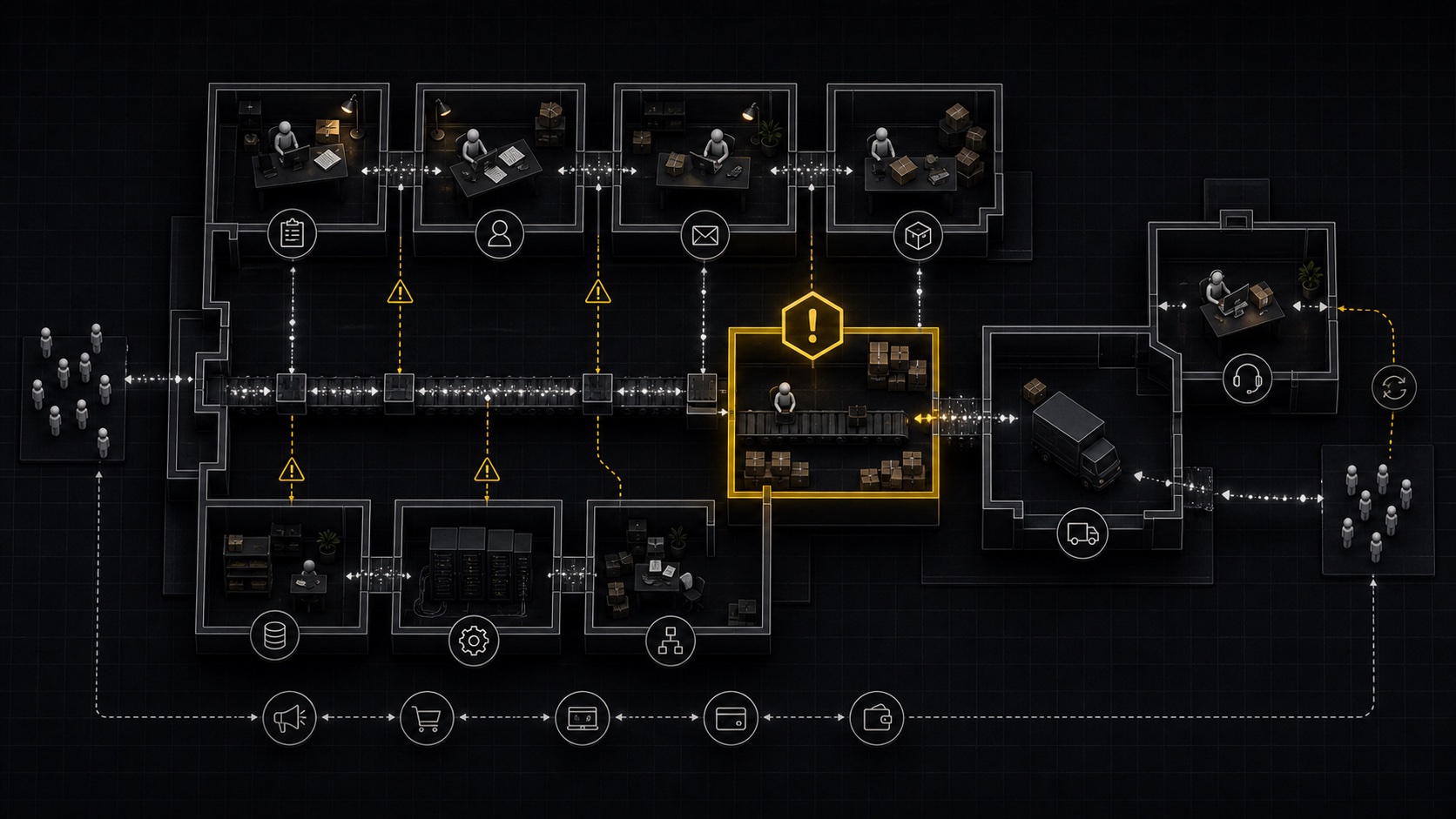
Stop treating your store like a static brochure. A scalable business requires a platform that grows with you. Many founders start on restrictive platforms only to realize they need to migrate to Shopify or a similar robust ecosystem to handle high volumes. If your site is slow or breaks under pressure, you are losing money. You must optimize for visual stability and performance to ensure that every visitor has a chance to become a buyer.
Strategic Market Positioning
Are you selling a commodity or a brand? Gig workers sell commodities; entrepreneurs build brands. If someone can find your product cheaper on a massive marketplace with one click, you have no moat. Scaling requires building a community and an email list that you own. Using tools like Klaviyo for Shopify allows you to turn one-time buyers into repeat customers, which is the only sustainable way to grow without constantly increasing your ad spend.
The Late Reveal: The Asset vs. The Income
The reason 90% of side hustles never scale is that the founders are building for today’s bank account instead of tomorrow’s balance sheet. A gig provides income; a business provides an asset. An asset is something you can sell, something that functions without you, and something that compounds over time. If you cannot take a month off without your revenue dropping to zero, you have built a job, not an asset.
To break the cycle, you must stop being the most important person in your business. You must become the architect of the system, not the operator of the machine. Only then can you move from the “surprising side business” phase into a legitimate creative empire.
You started this journey to find freedom, not to trade one boss for a thousand customers who act like bosses. Reframe your daily tasks as system-building exercises. If you aren’t building an elevator, you’ll be climbing those stairs forever.
Next step
Turn the side hustle into an operating model before scaling. Talk to DataTip.
Related Posts

Agentic Commerce: Why Your Data Infrastructure is the Real Bottleneck
Most e-commerce sites are optimized for human clicks, but AI agents are the new…


Shopify Inventory Is Capital. Sidekick Helps You Protect It.
Use Shopify Flows, Sidekick, purchase orders, transfers, barcode receiving, and…

No Source Content? Do Not Rewrite From a Guess.
When source content is missing from a rewrite brief, pause, request the…