

TL;DR: Shopify blogging works best when it supports buying decisions rather than simply filling a publishing calendar. Posts should answer customer questions, reduce objections, demonstrate expertise, support product discovery, and link to relevant products or articles. High-quality content can attract organic traffic over time, strengthen trust, improve SEO, and be repurposed for email, social media, product FAQs, and customer support.
- Create outcome-specific, buyer-focused content such as comparison, care, sizing, use-case, and troubleshooting guides.
- Use blog posts to address purchase hesitations and connect informed readers with relevant products.
- Repurpose authoritative articles across newsletters, social media, product pages, and customer-support responses.
- Prioritize human, genuinely helpful content over low-quality AI-generated material to maintain trust.
- Shopify supports multiple categorized blogs, internal linking, optimized images, headings, and custom search-result metadata.
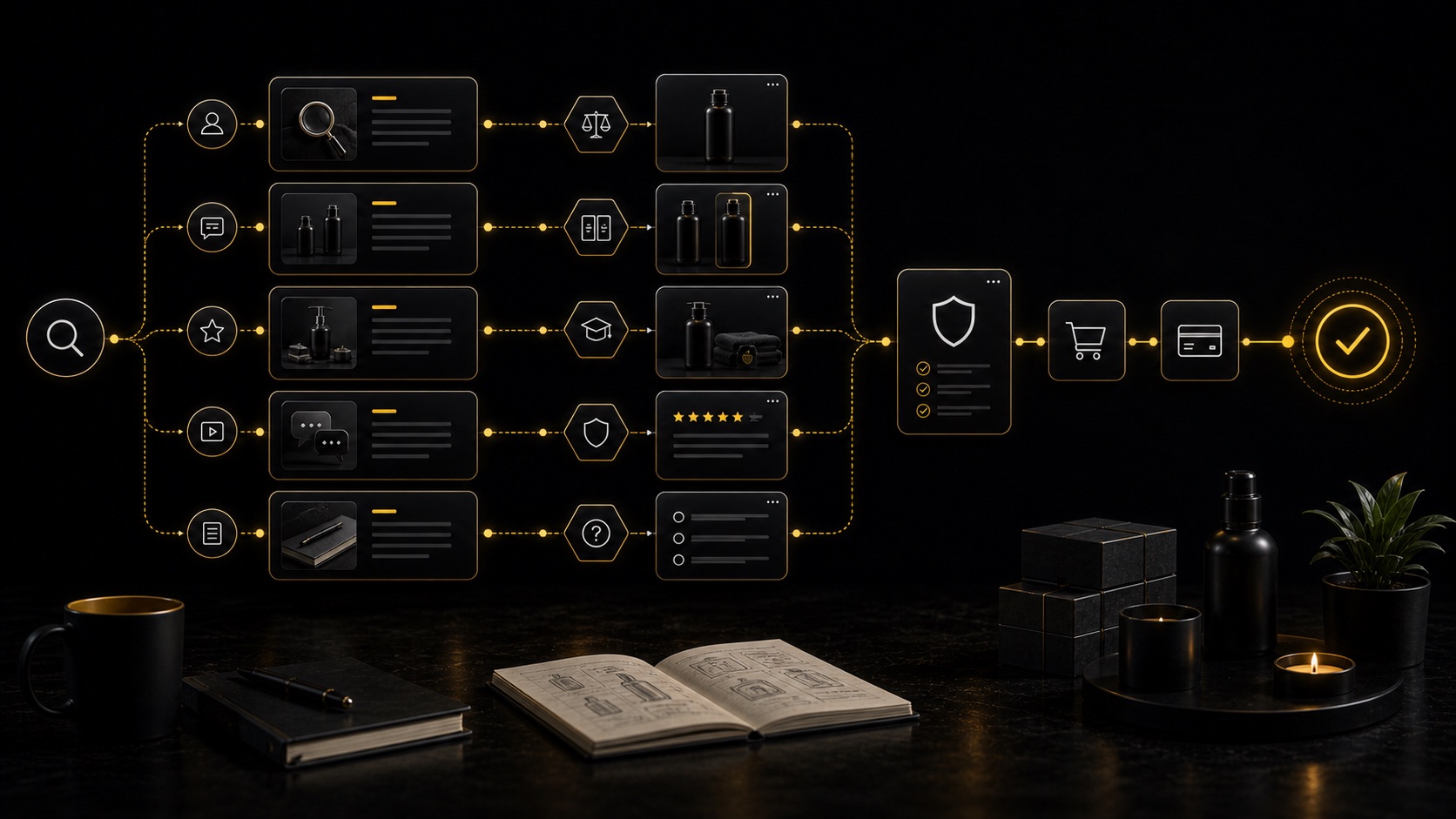
A Shopify blog should do more than fill a calendar. The best posts answer buying questions, reduce objections, support product discovery, and give search engines a reason to trust the store.
What this means in practice
- Make the title more outcome-specific.
- Add content cluster examples: comparison, care, sizing, use case, troubleshooting.
While social media feeds refresh every few seconds and newsletters disappear into crowded inboxes, a single blog post on your Shopify store can generate organic traffic for years. Most merchants view blogging as a chore, but it is actually the only built-in tool you have that builds a permanent digital asset without a recurring ad bill. Unlike third-party platforms that require complex integrations or separate hosting fees, your Shopify account includes a fully integrated blogging engine that is ready to scale with your brand from day one.
Nearly 55% of people read blog posts at least once a week, yet many Shopify owners leave their blog section untouched. We see brands spending thousands on temporary visibility while ignoring the infrastructure that Shopify provides for free. If you are not publishing, you are essentially leaving the most valuable real-estate in the search engine results pages to your competitors. Success in e-commerce requires more than just a product; it requires a destination. To build that, you must stop treating your e-commerce site like a finished product and start treating it like a living, breathing publication.
Why Shopify blogging is your most durable marketing asset
Blogging is a long-term asset that surfaces in search results years after publishing. Every channel you use to connect with customers has its specific strengths. Email newsletters land directly in inboxes, and Klaviyo remains the best email marketing tool for Shopify because it handles those direct relationships so well. Social media creates real-time conversations, and podcasts build intimate connections. However, blogging is built to last. A thoughtfully penned post can show up in search results years after you hit publish, providing a compounding return on the time you invested.
Blogging remains one of the most effective ways to drive traffic to your Shopify store. Every SEO-optimized post is another indexed page that can rank for specific keywords. This does more than just bring in visitors; it builds trust and authority. When you share deep expertise, you position your brand as a go-to resource rather than just another vendor. It also gives your brand a voice, allowing you to share the perspective, process, and values behind what you sell. In a market where trust is the primary currency, a blog is your most reliable vault.
The compounding effect of organic search
Using content to support the customer journey
Your blog is not just a traffic driver; it is a conversion tool that addresses the psychological barriers to purchase. High-quality posts can answer common questions and address hesitations that might otherwise stop a customer from hitting the ‘Add to Cart’ button. For example, if you sell technical outdoor gear, a blog post explaining the difference between 2-layer and 3-layer waterproof membranes does the heavy lifting for your sales team. By the time a user reaches your product page, they should already feel informed and confident in your expertise.
Furthermore, a single blog post acts as the primary fuel for your other channels. You can repurpose one long-form article into several pieces of micro-content:
- Social Media: Extract three key quotes for Instagram captions or LinkedIn posts.
- Email Marketing: Use the introduction as a ‘teaser’ in your weekly newsletter to drive clicks back to your site.
- Product Pages: Take the ‘How-to’ section and embed it as an FAQ on relevant product descriptions.
- Customer Support: Send links to specific articles when customers ask technical questions, saving your team time.
This efficiency is critical for lean teams. Instead of constantly hunting for new ideas, you create one authoritative source and distribute it across your ecosystem. This approach ensures that your marketing remains consistent and grounded in your brand’s core values.
Lessons from successful Shopify merchants
We can look at how established brands use their blogs to move beyond simple product listings. These merchants treat their blogs as publications, not just archives of company news. They understand that content is the bridge between a ‘visitor’ and a ‘customer.’
Wild Rye Baking: Building community through ‘CakeTalk’
Wild Rye Baking, founded by Sarah Chisholm, uses its blog ‘CakeTalk’ to share professional baking tips and recipe ideas. This strategy builds a community around the baking experience itself. By sharing expertise – such as how to achieve the perfect crumb or the chemistry of frosting – they activate their customer base. They aren’t just selling cake mix; they are selling the success of the baker. This creates engagement that lasts long after the initial purchase and turns one-time buyers into brand advocates.
Polysleep: Quality over AI-generated shortcuts
Polysleep, a mattress company, focuses on sleep hygiene tips and bedroom setup guides. Cofounder Jeremiah Curvers emphasizes brand consistency and content quality over low-quality, AI-generated content. In an era where generic AI text is everywhere, Polysleep maintains customer trust by ensuring their advice is human-centric and genuinely helpful. This is a vital lesson: your audience can tell when you are taking shortcuts. While the rise of agentic commerce is changing how people find information, the need for authentic, human-verified expertise remains the only way to protect your brand equity.
Weston Table: The ‘Content + Commerce’ model
Weston Table, an online homeware destination, blends editorial lifestyle content with e-commerce. Founder Dianne O’Connor treats the site like a high-end publication, featuring recipes and travel inspiration. This makes content and commerce feel inseparable. When a reader learns about a traditional Italian dinner party through a blog post, the curated plates and glassware listed below feel like a natural extension of the story, not an intrusive advertisement. This immersive experience is what separates a world-class brand from a generic dropshipping store.
Technical setup: Beyond the default ‘News’ blog
Your Shopify store comes with a default blog called ‘News.’ While this is a functional starting point, you are not limited to it. You can rename this blog or create additional blogs at any time to categorize your content. For example, a lifestyle brand might have three distinct blogs: ‘The Journal’ (lifestyle), ‘Pro Tips’ (tutorials), and ‘Inside the Studio’ (behind the scenes).
Step-by-step: Creating and optimizing your posts
Creating a post in the Shopify admin is straightforward, but the difference between a post that sits at the bottom of page 10 and one that hits page 1 lies in the technical execution.
- Navigate to Online Store > Blog Posts: Click ‘Add blog post’ to start.
- Structure with Headings: Use H2 and H3 tags to break up text. This is crucial for accessibility and helps search engines understand the hierarchy of your information.
- Optimize Visuals: You should optimize Largest Contentful Paint (LCP) for your blog pages. This means compressing images to ensure they load fast on mobile devices. A slow-loading blog will result in high bounce rates, which hurts your overall SEO.
- Internal Linking: Link to your products and other relevant articles. If you are discussing ad budgets, for example, you might link to a guide on hidden levers draining Google Ads budget to keep the reader engaged with your site.
- The Search Engine Listing Preview: Do not leave this to chance. Manually write your Meta Title and Meta Description to include your focus keyword and a clear call to action.
Managing multiple blogs
If you find that your content is becoming too diverse for a single feed, Shopify allows you to manage multiple ‘Blog’ entities. Each can have its own RSS feed and template. This is particularly useful for international brands that need to separate content by region or language, or for stores that want to separate a ‘Press’ section from their ‘Educational’ content. Proper categorization ensures that when a user subscribes to your updates, they are getting exactly the value they signed up for.
The reality of content: Effort vs. Reward
We won’t tell you that blogging is easy. It requires a commitment to quality that many merchants aren’t willing to make. However, that lack of competition is your opportunity. While others are looking for the next ‘hack’ to fix their rising CPA, you can focus on the fundamentals. Often, the real killer of conversions is your theme or a lack of trust – both of which are solved by a professional, content-rich storefront.
If you are just starting, do not feel pressured to publish daily. Start with one high-quality, 1.000-word guide per month. Focus on answering the most difficult question your customers ask. Over time, these posts accumulate, forming a protective ‘moat’ around your business that no competitor can simply buy their way through.
Key Takeaways
- Compounding Value: Blog posts are long-term assets that generate traffic years after publication, unlike social posts which have a short lifespan.
- Authority Building: Use your blog to answer customer questions and address hesitations, turning visitors into confident buyers.
- Repurposing Power: One high-quality article can provide content for your newsletter, social media, and FAQs.
- Quality Over Quantity: Follow the lead of brands like Polysleep and avoid low-quality AI content to maintain long-term customer trust.
- Integrated Platform: Shopify provides the tools natively; you don’t need external platforms like WordPress to build a high-ranking content strategy.
Frequently Asked Questions
Can I have more than one blog on my Shopify store?
Yes. While Shopify starts with a default blog named ‘News,’ you can create multiple blogs to keep different types of content organized, such as a ‘Company News’ blog and a separate ‘Educational Guide’ blog. This helps with navigation and user experience.
How often should I publish new blog posts?
Consistency is more important than frequency. It is better to publish one high-quality, authoritative post per month than four low-quality posts that offer no value to the reader. Quality content builds trust; filler content erodes it and can even hurt your SEO rankings.
Does blogging actually help with Shopify SEO?
Absolutely. Each blog post is a new page for search engines to index. By targeting specific keywords and providing valuable answers to user queries, you increase the number of ways potential customers can find your store organically. It also improves your site’s internal linking structure, which is a key ranking factor.
Next step
Build a Shopify content map around real buyer questions. Talk to DataTip.
Related Posts

Agentic Commerce: Why Your Data Infrastructure is the Real Bottleneck
Most e-commerce sites are optimized for human clicks, but AI agents are the new…


Shopify Inventory Is Capital. Sidekick Helps You Protect It.
Use Shopify Flows, Sidekick, purchase orders, transfers, barcode receiving, and…

No Source Content? Do Not Rewrite From a Guess.
When source content is missing from a rewrite brief, pause, request the…