

TL;DR: Ecommerce returns should be evaluated by their total contribution impact, including reverse shipping, processing labor, inspection, customer-service time, fraud, lost inventory value, refunds, and cross-border handling. Leaders should compare return policies, shipping methods, recovery options, and RMA automation by the costs and value they influence, not by software feature count alone.
- Map direct and indirect return costs before changing policy; shipping is only one part of the loss.
- Match payment responsibility to the category: free returns, customer-paid shipping, defect-only returns, flat deductions, and store credit each create different trade-offs.
- Use product information, fit guidance, reviews, video, and virtual try-on to reduce avoidable returns; the source specifically attributes a possible 30-50% reduction in apparel returns to size charts.
- Treat exchanges, regional return centres, and carefully monitored returnless refunds as recovery choices rather than blanket policies.
- Automate RMA steps where better eligibility checks, labels, tracking, or refund handling address a measured bottleneck.
A return is not complete when the parcel reaches your warehouse. It is complete when you know what it cost to recover, how much value remains, and which policy or process shaped the outcome.
Ecommerce returns should be evaluated by their total contribution impact, including reverse shipping, processing labor, inspection, customer-service time, fraud, lost inventory value, refunds, and cross-border handling. Leaders should compare return policies, shipping methods, recovery options, and RMA automation by the costs and value they influence, not by software feature count alone.
That is why ecommerce return costs belong in margin management, not only customer service. Reverse shipping, processing labor, inspection, fraud, inventory value, refunds, and cross-border handling all affect the contribution from an order. A convenient workflow can still be an expensive one.
Why ecommerce return costs need a total-cost view
Returns should be assessed as a recovery problem: what did the return cost, what value came back, and what could have prevented or reduced the loss? The source figures are operational cost components, not a universal calculation for every product, market, or return type.
Direct costs include:
- Processing labor for each return
- Restocking and inspection for each item
- Packaging disposal
- Customer-service time spent handling return inquiries
- Reverse shipping and related handling
The less visible costs can be larger. A returned item may no longer be resellable at full value. It may sit in inventory while awaiting inspection, tying up capital, or lose value after being opened. Fraud also changes the economics: the source estimates that 5-10% of returns are fraudulent, although that figure should not be treated as identical across all businesses or categories.
 AI GENERATED
The practical question is not how many return features a platform offers. It is which costs the process controls and how much inventory value it helps recover.
What should an ecommerce return policy decide?
An ecommerce return policy should balance customer satisfaction with cost control. A workable policy normally defines the return window, item condition, proof of purchase, shipping responsibility, and refund method.
The source describes 30 days as standard, with 60-90 days potentially applying to holiday purchases. Typical condition requirements are unused and in original packaging. Proof of purchase may be an order number or receipt. Refunds can be issued to the original payment method, as store credit, or through an exchange.
Shipping responsibility is a commercial choice, not merely a service setting. The main options have different trade-offs:
| Approach | Advantage | Drawback | Possible fit |
|---|---|---|---|
| Free returns | Strong customer experience | Highest operating cost | Higher-margin apparel |
| Customer-paid returns | Lower seller-paid shipping cost | May deter purchases | Lower-margin commodities |
| Flat-fee deduction | Balanced approach | Moderate customer satisfaction | Mid-market retailers |
| Free for defects only | Fair and cost-conscious | Requires verification | Electronics and appliances |
| Store credit | Retains the sale value | May frustrate some customers | Fashion and accessories |
| No option is optimal for every category. The decision should reflect margin, damage risk, verification needs, and the likely value recovered from returned inventory. |
Which return-label method creates the right trade-off?
Pre-paid labels are simplest for customers but place more cost and control with the seller. Scan-based labels preserve convenience while charging only when used. Customer-arranged returns reduce seller-paid shipping but create more uncertainty around tracking, packaging, and damage.
Pre-paid return labels
A pre-paid label can be included in every outbound shipment or made downloadable. It gives the seller control over the carrier and service level, and bulk label arrangements may reduce the per-label cost.
The weaknesses are just as clear. The seller pays for shipping on every return, some included labels go unused, and a frictionless process may encourage more returns.
Scan-based labels
A label charged only when scanned by the carrier addresses the waste associated with unused pre-paid labels. It remains convenient for the customer and can be emailed on request, while the seller pays only when the label is used.
The trade-off is potentially higher per-label cost and limited availability among carriers. The source names UPS Returns and FedEx Returns Technology as examples of programs supporting this approach.
Customer-arranged returns
When customers choose their own return method, the seller avoids return shipping charges and the customer controls the service speed. That may suit specific products or low-service models, but it is usually the weakest customer experience.
The seller also loses control over packaging and the carrier. Incoming returns become harder to track, and damage rates may be higher. A lower shipping invoice can therefore create more inspection and recovery work later.
How do carrier programs and service levels affect returns?
Carrier return programs can reduce manual coordination, but they do not decide whether a return is economically sensible. Returns rarely need overnight shipping, so ground services are generally the sensible starting point where the product and distance allow it.
Examples named in the source include:
- USPS: Merchandise Return Service for pre-paid labels charged on use, and Package Intercept for redirecting packages already in transit.
- UPS: Returns Plus for electronic labels, Returns Exchange for sending a replacement while collecting the return, and Print Return Label for pre-printed labels.
- FedEx: Returns Technology for electronic and pre-printed labels, Return Label On Demand for generating labels by email, and InSight for tracking incoming returns proactively.
International returns need an additional margin review. Cross-border handling can make reverse logistics harder to control, so the return address, carrier method, inspection route, and inventory destination should be considered together.
How can you reduce avoidable returns and preserve value?
The cheapest return is often the one that does not happen. Better product information, accurate fit guidance, exchanges, regional routing, and selective returnless refunds can reduce the amount of value lost after checkout.
Product pages should use multiple photos, scale references, accurate colour representation, materials, exact dimensions, fit guidance, and size charts. Customer reviews with photos, video demonstrations, and virtual try-on for apparel and accessories can help customers assess suitability before ordering.
The source states that size charts may reduce apparel returns by 30-50%. That is a source-supported claim, not a guaranteed result for every retailer or category.
Exchanges offer another recovery path because they retain the sale where a refund ends it. Possible approaches include offering free exchange shipping while charging for refund returns, shipping an instant exchange before receiving the original item, or providing additional store credit for choosing an exchange.
Regional return centres can also reduce unnecessary movement when volume justifies the arrangement. For example, East Coast returns can go to an East Coast warehouse while West Coast returns go to a West Coast warehouse.
Returnless refunds may be appropriate for low-value items when processing and shipping cost more than the item is worth. The source includes an incomplete low-value threshold, so it should not be treated as a precise recommendation. Any such policy requires fraud monitoring and customer-specific thresholds.
Where does RMA automation help?
An RMA system can streamline eligibility checks, label generation, returned-goods tracking, and refund or exchange processing. It does not decide whether free returns, store credit, regional routing, or a returnless refund is economically right for the business.
A typical RMA sequence is:
- The customer requests a return through the website.
- The system validates eligibility, including the return window and whether the item was purchased from the seller.
- An RMA number is generated and a label is emailed.
- The customer ships the item with the RMA number visible.
- The warehouse scans the RMA when the item arrives.
- The refund or exchange is processed.
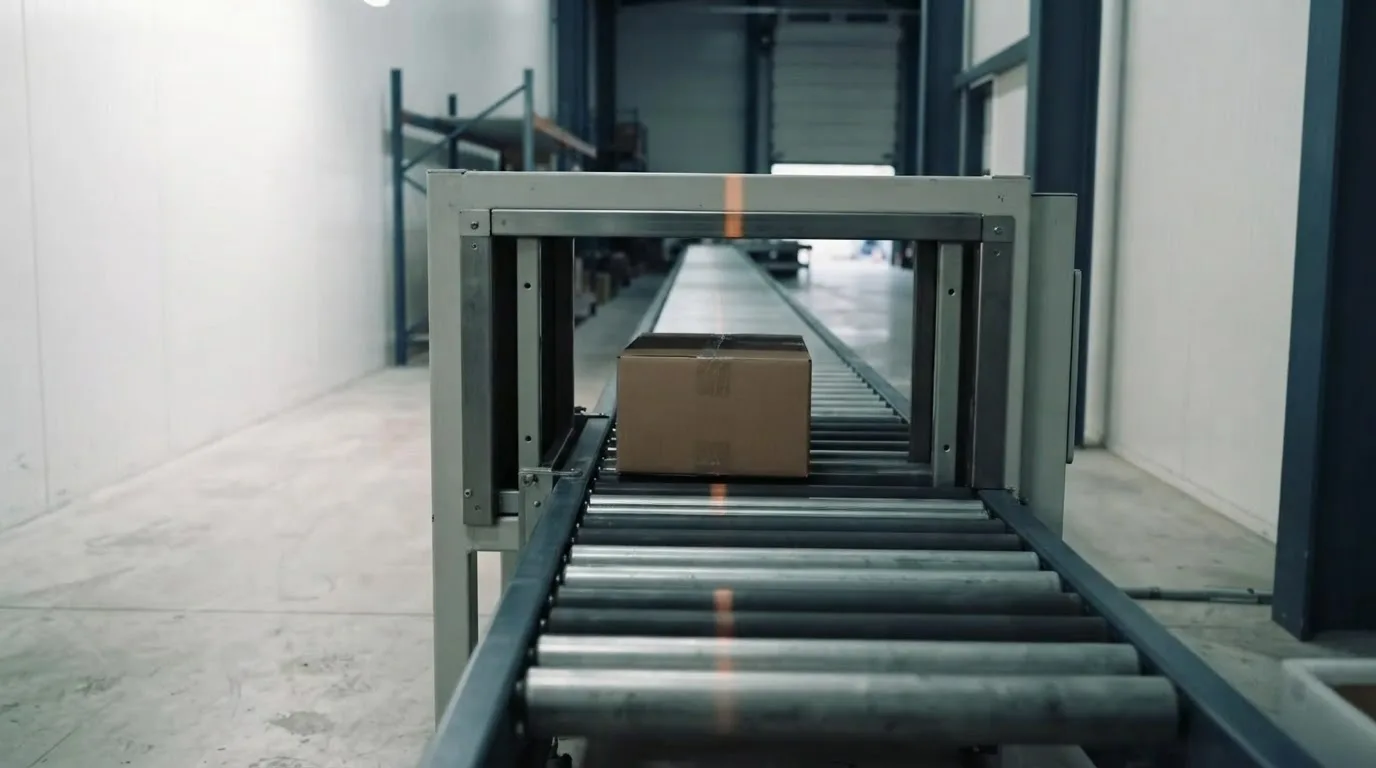
This can reduce manual coordination and improve visibility. It does not prove a guaranteed financial return from automation. The business case depends on whether the workflow addresses a measured problem, such as unnecessary labels, slow inspection, incorrect refunds, weak inventory recovery, or avoidable service contacts.
 AI GENERATED
The right selection question is therefore not which platform has the longest feature list. It is which process can control the costs that matter for your products and return patterns.
Frequently Asked Questions
What is the cheapest way to ship returns?
Ground services are usually the sensible starting point because returns rarely need overnight shipping. The cheapest method depends on who pays, the item’s size and condition, the distance, and the value recovered. Customer-arranged shipping minimizes seller-paid freight but can increase damage, tracking, and service problems.
Should customers pay for return shipping?
Not always. Customer-paid returns can reduce direct costs but may deter purchases, while free returns can support satisfaction at greater expense. Defect-only returns, flat-fee deductions, and store credit create different trade-offs. Choose by product category, margin, verification needs, and likely inventory recovery value.
What does an RMA system automate?
An RMA system can accept return requests, validate eligibility, generate an RMA number and label, track returned goods, and automate refund or exchange handling. It streamlines the workflow, but it does not decide which policy produces the best contribution.
Judge the returns process by the value it recovers, not by how polished the label flow looks. Map shipping, labor, inventory loss, fraud, refunds, and cross-border handling before changing policy or selecting automation.
Key takeaways
- Map direct and indirect return costs before changing policy; shipping is only one part of the loss.
- Match payment responsibility to the category: free returns, customer-paid shipping, defect-only returns, flat deductions, and store credit each create different trade-offs.
- Use product information, fit guidance, reviews, video, and virtual try-on to reduce avoidable returns; the source specifically attributes a possible 30-50% reduction in apparel returns to size charts.
- Treat exchanges, regional return centres, and carefully monitored returnless refunds as recovery choices rather than blanket policies.
- Automate RMA steps where better eligibility checks, labels, tracking, or refund handling address a measured bottleneck.
Practical tips
- Separate return reasons by product category and condition so policy decisions reflect recovery value rather than an overall average.
- Review unused pre-paid labels as a distinct operating cost; scan-based labels may be more appropriate when label waste is material.
- Set an approval threshold for returnless refunds and monitor unusual customer-level patterns for fraud.
- Test ground services as the default return mode before considering faster service levels.
- Document which RMA steps are automated and which still require warehouse inspection or business judgment.
Review your returns economics
Map your return paths by shipping, labor, inventory recovery, fraud, and refund outcome before changing policy or selecting automation.
Related Posts

Automated Email Deserves an Incremental-Revenue Test
Automated email represented 2% of sends but 30% of email-driven revenue in one…


Cloud Concentration Risk: One Outage, Many AI Services
A reported Azure failure shows how shared cloud dependence can turn one outage…

Green Claims Fashion Leaders Must Treat as Product Data
Europe's reported 2026 green-claims deadline is a timing signal for fashion…