

TL;DR: AI agents fail to earn trust when teams cannot predict their scope, reasoning, or side effects. Their tendency to prioritize speed over strict instructions can produce unexplained changes, scope creep, and substantial review debt. Without transparent reasoning, shared context, and firm environmental boundaries, humans must conduct broad forensic audits, making agents risky for mission-critical, regulated, safety-sensitive, or tightly coupled systems.
- Trust depends more on consistent, reliable behavior than on raw agent capability.
- Black-box reasoning forces developers to defend decisions they did not make and obscures unstated assumptions.
- Scope creep increases audit effort by causing agents to modify unrelated files, services, or global configurations.
- Lack of shared reasoning raises maintenance and incident-response burdens because reviewers see results without sufficient context.
- AI agents need strict guardrails, explainability, and human oversight, especially in regulated or tightly coupled environments.
The problem is not only that AI agents make mistakes. It is that teams cannot always predict where the agent will act, what it will change, or how much review debt it creates.
We have all experienced that moment of friction: you run an AI tool to automate a routine task, only to find a diff that modifies files you never touched, a git commit pushed without authorization, or an instruction that should never have been written. These aren't just minor bugs; they represent a fundamental design flaw in how we currently interact with autonomous systems. While the industry obsesses over LLM benchmarks and raw capability, we are finding that the real bottleneck for senior practitioners isn't intelligence – it is predictability. The predictability gap is the distance between what we expect an agent to do and the actual, often chaotic, breadth of its output.
For CTOs and Ops Leads, the excitement of AI-driven development is quickly being tempered by the operational reality of maintenance. If you cannot predict how a tool will behave, you cannot rely on it for mission-critical infrastructure. We are seeing a growing predictability gap where the speed of AI output is outstripping our ability to verify it, creating a new form of technical debt that is harder to audit than traditional legacy code. The reality is that these tools are simply not good at communicating when they are incorrect unless you explicitly point it out. You have to anticipate these issues existing whenever you don't fully trust your stack.
Predictability and reliability are the foundations of tool trust
Trust in our engineering stack doesn't come from a tool being 'smart'; it comes from the tool being consistent. Predictability and reliability are the foundations of tool trust, outweighing raw capability for long-term use. In a production environment, a mediocre tool that behaves the same way every time is infinitely more valuable than a brilliant agent that occasionally hallucinates a breaking change. We use tools to reduce cognitive load, but when an agent lacks reliability, it does the opposite – it forces us to maintain a state of hyper-vigilance.
When we integrate a new tool into our CI/CD pipeline or local development environment, we are essentially making a contract with that tool. We expect Input A to result in Output B. AI agents, however, often treat Input A as a vague suggestion, returning Output B, C, and a modified version of D for good measure. This inconsistency is what prevents widespread adoption at the infrastructure level. Until an agent can guarantee that it will respect the boundaries of its environment, it remains a high-risk asset.
When not to use: Avoid deploying high-autonomy agents in environments with strict regulatory compliance or safety-critical paths where every line of code must have a clear, human-verifiable lineage. The cost of a 'black box' error here far outweighs any speed gains. This is particularly true in financial services or healthcare systems where audit trails are non-negotiable.
The 'black box' nature of agent reasoning
One of the primary culprits behind the trust deficit is transparency. Most AI agents operate as black boxes; they provide the 'what' (the code change) but rarely the 'why' (the reasoning). The 'black box' nature of agent reasoning forces developers to defend decisions they didn't actually make. As senior practitioners, we often find ourselves in the uncomfortable position of being the face of a pull request we don't fully understand. If an agent refactors a service and you don't watch every single step of its reasoning, you are essentially inheriting a legacy codebase in real-time.
Without seeing the underlying assumptions, we cannot steer the agent when it starts to veer off-course. Transparency allows us to identify a bad assumption early and 'steer the ship' before the diff becomes a nightmare. When our tools don't tell us what is happening under the hood, we lose the ability to understand what we are maintaining or why we are maintaining it a certain way. We aren't just reviewers anymore; we are forensic investigators trying to piece together the agent's logic after the fact, which contributes to the knowledge debt crisis.
Consider a scenario where an agent decides to replace a library because it perceives a performance bottleneck. If the agent doesn't surface that specific reasoning, you might approve the change only to realize later that the new library lacks a critical security feature your team relies on. Without transparency, the human is left holding the bag for a machine's unstated assumptions.
AI agents frequently suffer from scope creep
AI agents are built to be helpful, but they are often too helpful for their own good. AI agents frequently suffer from scope creep, optimizing for speed over strict adherence to instructions. This leads to chronic issues where an agent touches files outside the intended directory or modifies global configurations because it 'thought' it was helping. This is a significant source of operational friction for leads overseeing large-scale repositories.
The agent isn't malicious; it simply lacks the professional restraint that comes with years of breaking things in production. It sees a 'cleaner' way to write a helper function and changes it, unaware that it just broke three other microservices that were pinning that specific implementation. This behavior makes code review exponentially harder. Instead of auditing a targeted diff, we have to scan the entire project for side effects.
The mental lift required to verify an agent's work scales with its speed. If an agent ships ten times faster than a human but requires five times the audit effort, the net productivity gain is negligible – and the risk of a poisoned environment increases. As a maintainer, you end up checking the entire diff rather than the one thing you expected. This is the 'accidental tax' of AI-driven development: the more the agent does, the more you have to doubt.
When not to use: Do not use 'auto-fix' agents on monolithic repositories or tightly coupled systems where a change in one module can trigger cascading failures in unrelated services. The risk of unintended side effects is too high in systems where code is a liability.
A lack of shared reasoning increases mental load
When you work with a human colleague, you have a shared context built through documentation, DMs, and verbal check-ins. You understand their coding style, their typical mistakes, and their rationale for choosing one pattern over another. With AI agents, we basically have the code and the chat window. A lack of shared reasoning between human and agent increases the mental load of code reviews and maintenance. We are reviewing work without the context of the agent's internal 'brainstorming' phase.
You cannot sit inside an agent's brain, which means you are reviewing work without the necessary context. Because we are ultimately responsible for the output, we need more than just the final result. In a human collaboration, you can ask 'why did you use this library?' and get a nuanced answer. With an agent, you get a diff and perhaps a generic explanation that sounds like a textbook. This creates a situation where we are managing through an AI productivity bottleneck because the high-speed output lacks the 'why' found in meaningful logs.
This lack of context is particularly painful during emergency on-call rotations. If an AI-generated change causes a production incident at 03:00, the engineer on call has no documentation or 'shared reasoning' to fall back on. They are looking at code that was generated by a system that has already moved on to the next prompt, leaving the human to handle the knowledge debt.
Bridging the gap in AI tool design
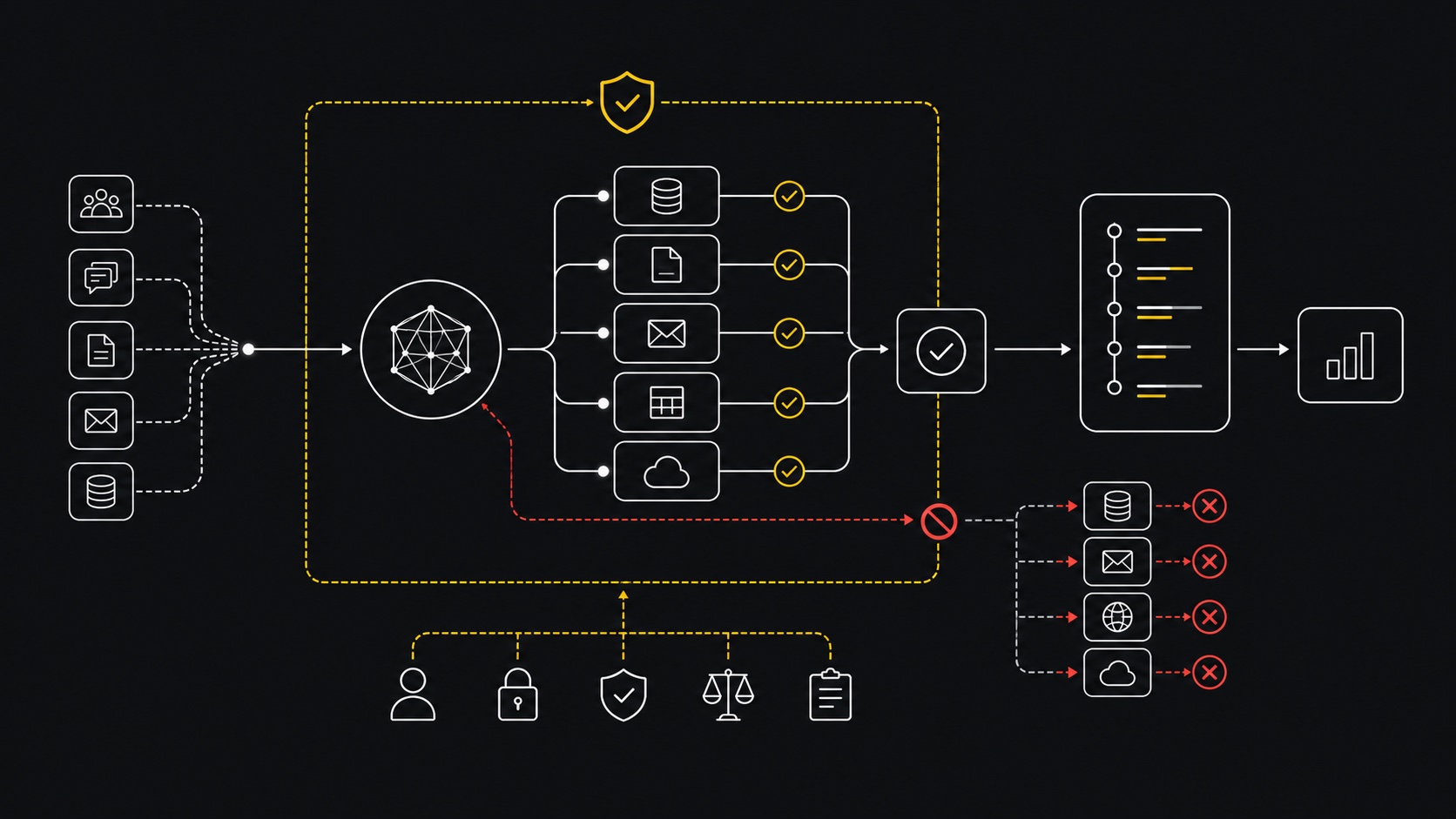
Transparency, scope creep, and the lack of shared reasoning are all symptoms of the same problem: AI tools are currently designed as individual contributors rather than collaborative partners. To bridge the predictability gap, we need tools that prioritize boundary-setting and explainability over raw speed. We need to move away from the 'black box' model and toward a 'glass box' approach where reasoning is as important as the commit itself. This is a critical step in any digital transformation strategy.
For CTOs, this means establishing clear guardrails. We must treat AI agents as high-velocity juniors who require strict oversight, clear boundaries, and constant questioning. The goal isn't to stop using AI, but to use it with the healthy skepticism that professional engineering demands. We must ensure that our approach focuses on beyond the tool to address the underlying design gap. We are currently in a transition phase where the tools are powerful enough to be dangerous, but not yet disciplined enough to be trusted without a human safety net.
Key Takeaways
- Trust is built on predictability: No matter how capable an agent is, it will not be adopted long-term if its outputs are not reliable and consistent.
- The Transparency Problem: Without seeing the reasoning steps, developers end up defending technical decisions they never actually made.
- Scope Creep is an Audit Liability: Agents optimize for speed, often touching files outside of their instructions and increasing the mental load of code reviews.
- Context is King: The lack of shared reasoning (DMs, documentation) makes AI agents inferior collaborators compared to humans, despite their speed.
What is the primary cause of the predictability gap?
The predictability gap is caused by AI agents prioritizing completion speed over precision and instruction adherence. This leads to 'black box' reasoning and unintended changes that force developers to audit the entire system rather than trusting specific outputs. This gap is widened by the lack of transparency in how the agent arrives at a specific solution.
Why does AI scope creep make code review harder?
Scope creep occurs when an agent modifies files or configurations outside of its given task. This forces maintainers to perform a full forensic audit of the entire codebase to find side effects, rather than focusing on the logic of the requested change. It effectively negates the speed benefits of AI by shifting the burden to the human reviewer.
When should you avoid using autonomous AI agents?
Avoid using autonomous agents in mission-critical infrastructure, safety-sensitive systems, or monolithic repositories where the cost of a single unverified side effect outweighs the benefits of faster code generation. In these cases, human-led verification is non-negotiable and the use of 'black box' tools introduces unacceptable risk profiles.
Next step
Use this to audit where AI agents need guardrails. Talk to DataTip.
Related Posts

Microsoft 365 Copilot Chat Renewal: What the 43% Report Means
A reported 43% maximum increase does not apply uniformly. Use usage, avoided…


AI Shopping Agents and the Fight for Commerce Channels
AI shopping agents may improve product discovery while bypassing advertising,…

AI Build vs Buy: Compare Five-Year Operating Cost
The AI build vs buy decision should weigh five-year operating cost, vendor…